
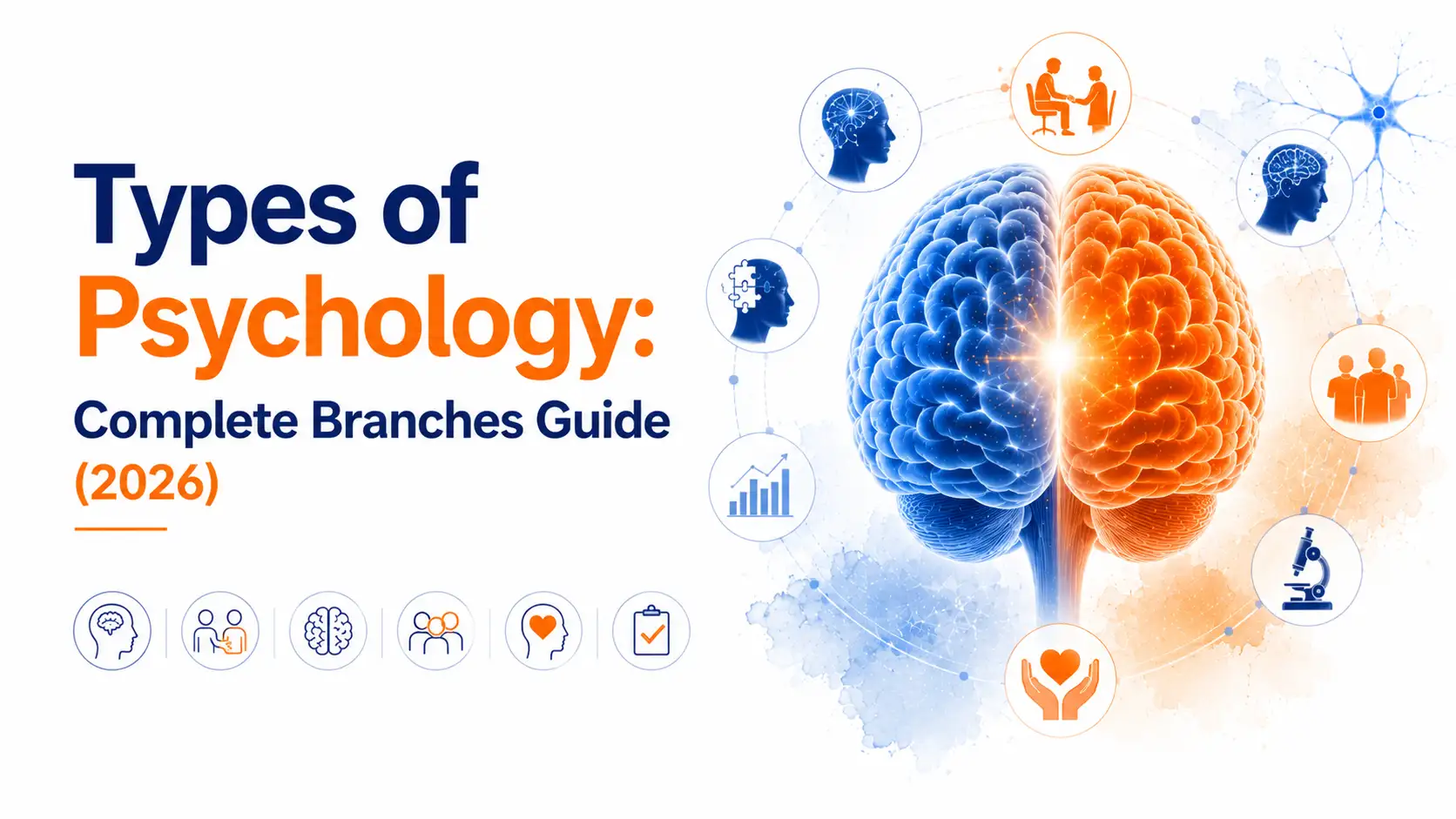
Psychology isn’t one field. It’s a collection of specialties that barely resemble each other on the surface — a researcher studying memory in a lab has almost nothing in common day-to-day with a therapist treating trauma, or an I-O psychologist redesigning a company’s hiring process. Understanding these branches helps you find the right kind of help, the right career path, or simply a clearer picture of how the mind gets studied from a dozen different angles.
What Are the Primary Branches of Psychology?
The primary branches of psychology include clinical, cognitive, developmental, behavioral, social, forensic, health, and industrial-organizational psychology. Theoretical branches focus on understanding the mechanics of thought and behavior itself. In contrast, applied branches take that knowledge and put it to work — treating mental illness, improving workplaces, or supporting legal proceedings.
Broadly, psychology splits into two camps:
- Theoretical (research) branches — cognitive, biological, developmental, social — built around understanding why the mind works the way it does.
- Applied branches — clinical, counseling, forensic, health, I-O — built around using that understanding to solve real problems for real people.
Most psychologists end up straddling both, since good applied work depends on solid theory, and good theory eventually gets tested in applied settings.
Clinical vs. Counseling Psychology: What’s the Difference?
Clinical psychology focuses on diagnosing and treating severe mental illness and complex psychopathology through therapy and psychological testing. In contrast, counseling psychology generally supports people through everyday stressors, career transitions, and milder emotional challenges. The line between them has blurred over the decades, but the training emphasis still differs.
| Dimension | Clinical Psychology | Counseling Psychology |
| Primary focus | Severe/complex disorders (schizophrenia, major depression, PTSD) | Adjustment issues, relationships, career stress |
| Setting | Hospitals, psychiatric clinics, private practice | University counseling centers, community clinics |
| Assessment tools | Heavy use of psychological testing and diagnostic batteries | Less testing-focused, more talk-therapy centered |
| Degree path | PhD or PsyD in Clinical Psychology | PhD in Counseling Psychology |
Both require licensure, and both can conduct psychotherapy — the distinction is more about training emphasis and typical caseload than a hard boundary. If you’re trying to understand what’s actually happening during a diagnosis, our guide on mental health pathology breaks down how clinicians identify and classify conditions in the first place.
What Is Cognitive Psychology?
Cognitive psychology studies internal mental processes — memory, attention, perception, language, and problem-solving — treating the mind somewhat like an information-processing system. It emerged in the 1950s and 60s as a direct challenge to strict behaviorism, which had refused to study anything that couldn’t be directly observed.
This branch is behind concepts most people have encountered without realizing it: working memory limits, confirmation bias, cognitive load, and the dual-process theory of thinking (fast, automatic judgments vs. slow, deliberate reasoning). Cognitive psychologists run controlled lab experiments — reaction-time tasks, memory recall tests, eye-tracking studies — to map out how these processes actually function.
What Is Behavioral Psychology?
Behavioral psychology (behaviorism) explains behavior purely through learning processes — classical conditioning and operant conditioning — without appealing to internal mental states. It dominated psychology for much of the early-to-mid 20th century through figures like B.F. Skinner and John Watson.
Its practical legacy is enormous. Applied Behavior Analysis (ABA), used widely in autism intervention, descends directly from behaviorist principles. So does most of modern habit-formation research, token economy systems used in classrooms and psychiatric wards, and reinforcement-based approaches to workplace training.
Which Branch of Psychology Studies Brain Function and Behavior?
Biopsychology and neuropsychology study how brain structures, neurotransmitters, and biological processes directly shape thoughts, emotions, and behavior. Neuropsychologists in particular assess how brain injuries, degenerative conditions, or developmental differences affect cognitive and behavioral functioning — often through standardized neuropsychological testing batteries.
This branch overlaps heavily with neuroscience proper. A neuropsychologist might evaluate someone after a stroke to map exactly which cognitive functions were affected and which were spared, informing both prognosis and rehabilitation planning.
Developmental Psychology: Studying the Full Lifespan
Developmental psychology tracks how thinking, emotional regulation, and social behavior change from infancy through old age. It’s built on foundational frameworks like Piaget’s stages of cognitive development and Erikson’s psychosocial stages, though modern developmental psychology has moved well past treating these as rigid, universal sequences.
Key areas within this branch include:
- Child development — language acquisition, attachment formation, early cognitive milestones
- Adolescent psychology — identity formation, peer influence, risk-taking behavior
- Adult development — career and relationship transitions, midlife shifts
- Geropsychology — aging, cognitive decline, and late-life mental health
What Is Social Psychology?
Social psychology studies how individual thoughts, feelings, and behaviors are shaped by the presence — real or imagined — of other people. It’s the branch responsible for some of psychology’s most famous (and controversial) studies, including Solomon Asch’s conformity experiments and Stanley Milgram’s obedience studies.
Concepts like groupthink, the bystander effect, in-group/out-group bias, and cognitive dissonance all come out of social psychology. It’s also the discipline most directly informing fields like marketing, political messaging, and organizational culture design.
Forensic Psychology: Where Psychology Meets the Law
Forensic psychology applies psychological principles and research to legal and criminal justice contexts, including competency evaluations, criminal profiling, jury selection consulting, and expert testimony. Forensic psychologists might assess whether a defendant is competent to stand trial, evaluate risk of reoffending, or consult on custody disputes.
This field sits at a genuinely difficult intersection — balancing clinical objectivity against a legal system that often wants a definitive answer where psychological assessment can only offer probability and nuance.
Health Psychology: The Mind-Body Connection
Health psychology studies how psychological, behavioral, and social factors influence physical health and illness. It draws heavily on the biopsychosocial model — the same framework used to explain mental disorders — but applies it to conditions like chronic pain, heart disease, and diabetes management.
A health psychologist might work with a cardiac patient on stress-reduction techniques post-surgery, or help a chronic pain patient build coping strategies that reduce reliance on medication. The field has grown substantially as healthcare systems increasingly recognize that behavior change (diet, exercise adherence, smoking cessation) often matters as much as medication.
Industrial-Organizational (I-O) Psychology
Industrial-Organizational psychology applies psychological principles to workplace behavior, covering hiring processes, employee motivation, Leadership development, and organizational culture. I-O psychologists design assessment tools for hiring, study what actually drives job satisfaction and retention, and advise on organizational restructuring.
This is consistently cited as one of the fastest-growing psychology specialties, driven largely by remote and hybrid work reshaping how companies think about culture, productivity measurement, and employee wellbeing.
Educational and School Psychology
Educational psychologists study how people learn and design better teaching methods, curricula, and assessment tools. School psychologists apply this more directly within K-12 settings — conducting learning disability assessments, supporting students with behavioral challenges, and consulting with teachers on classroom management strategies.
Applied Psychology vs. Theoretical Psychology
| Dimension | Theoretical Psychology | Applied Psychology |
| Goal | Understand mental processes and behavior | Solve real-world problems using psychological knowledge |
| Example branches | Cognitive, biopsychology, social psychology (research side) | Clinical, forensic, I-O, health, school psychology |
| Typical setting | University labs, research institutions | Clinics, workplaces, courtrooms, schools |
| Output | Published research, theoretical models | Direct client/patient/organizational outcomes |
Neither exists in a vacuum. Applied psychologists rely on decades of theoretical research to justify their interventions, and theoretical researchers increasingly design studies with direct applied questions in mind — a shift heavily documented in how modern psychological research methods are structured around real-world validity, not just lab-controlled precision.
How Many Subfields Does the APA Recognize?
The American Psychological Association recognizes 54 distinct divisions, covering specialized subfields ranging from exercise and sport psychology to quantitative methods, trauma psychology, and media psychology. This number reflects how far the field has fragmented from its origins as a single unified discipline into a sprawling network of specialized applications.
Some lesser-known APA divisions include psychology of religion and spirituality, media psychology and technology, and the study of peace, conflict, and violence — a reminder that psychology’s applications extend far beyond the therapy room.
What Is the Fastest-Growing Branch of Psychology in 2026?
Industrial-Organizational psychology and cyberpsychology (the study of human behavior in digital and online environments) are among the fastest-growing branches, driven by remote-work dynamics, workplace culture optimization, and the psychological effects of near-constant digital engagement. Cyberpsychology in particular has expanded rapidly, studying phenomena like online disinhibition, social media’s effects on self-esteem, and the psychology of algorithmic content consumption.
Neuropsychology is also seeing sustained growth, partly driven by an aging population and rising demand for cognitive assessment related to dementia and traumatic brain injury.
Choosing a Branch: What Actually Matters
If you’re considering psychology as a career path or trying to figure out which specialist you actually need, the distinctions above aren’t just academic. A person dealing with workplace burnout needs a very different kind of help than someone navigating a custody dispute or managing a chronic illness diagnosis. Matching the right branch to the right problem saves time, money, and frustration.
For anyone building general literacy in the field before specializing, it helps to start with the foundational question of what psychology actually is before narrowing into a specific branch.
Where YourBrainLens Fits In
At YourBrainLens, the aim isn’t to push readers toward one narrow definition of psychology. It’s to make the full landscape of the field understandable — so that someone searching for help, a student choosing a specialization, or a curious reader can see exactly where a given concept, therapy type, or research method fits into the bigger picture. Psychology’s fragmentation into dozens of subfields can feel overwhelming from the outside; breaking it down by function, rather than jargon, makes it navigable. For an official, authoritative breakdown of recognized specialties, the American Psychological Association’s divisions page remains the definitive reference.
Frequently Asked Questions
What’s the difference between a psychologist and a psychiatrist?
A psychologist typically holds a PhD or PsyD and provides therapy and psychological testing. At the same time, a psychiatrist is a medical doctor (MD) who can prescribe medication and often focuses more on the biological/pharmacological side of treatment.
Do I need a PhD to work in psychology?
Not always. Master’s-level psychologists can work in school psychology, some counseling roles, and I-O psychology, though clinical practice and independent licensure generally require a doctoral degree.
Is forensic psychology the same as criminal profiling?
No. Criminal profiling is one small, often-dramatized application within forensic psychology, which more commonly involves competency evaluations, risk assessments, and expert testimony in civil and criminal cases.
Can one psychologist work across multiple branches?
Yes, though it’s uncommon at a deep level — many psychologists specialize in one primary branch (say, clinical) while incorporating techniques or research from adjacent fields like health or developmental psychology.
Which branch of psychology should I study if I want to help people directly?
Clinical, counseling, and school psychology are the most direct routes to hands-on client or student work. In contrast, research-heavy branches like cognitive or social psychology are better suited to those drawn to lab-based investigation.
Is I-O psychology a good career path?
Yes — it’s consistently ranked among the fastest-growing and highest-paying psychology specialties, largely because organizations increasingly rely on data-driven approaches to hiring, retention, and workplace culture.
The Takeaway
Psychology isn’t a single discipline wearing different hats — it’s dozens of genuinely distinct fields that happen to share a common ancestor. Knowing the difference between a clinical psychologist and a health psychologist, or between theoretical and applied work, changes how you search for help, how you evaluate research claims, and how you think about the field as a whole. Start your journey to understand the mind more clearly with YourBrainLens.





19 thoughts on “Types of Psychology: A Complete Guide to Every Branch”